
Panasonic Lumix DC‑S5 II
Compact full‑frame hybrid for creators who prioritise video and portability
A full‑frame mirrorless hybrid designed for creators who need a compact body with strong video features and modern AF. It sits as a more affordable and compact alternative to Panasonic's higher‑end S1 series.
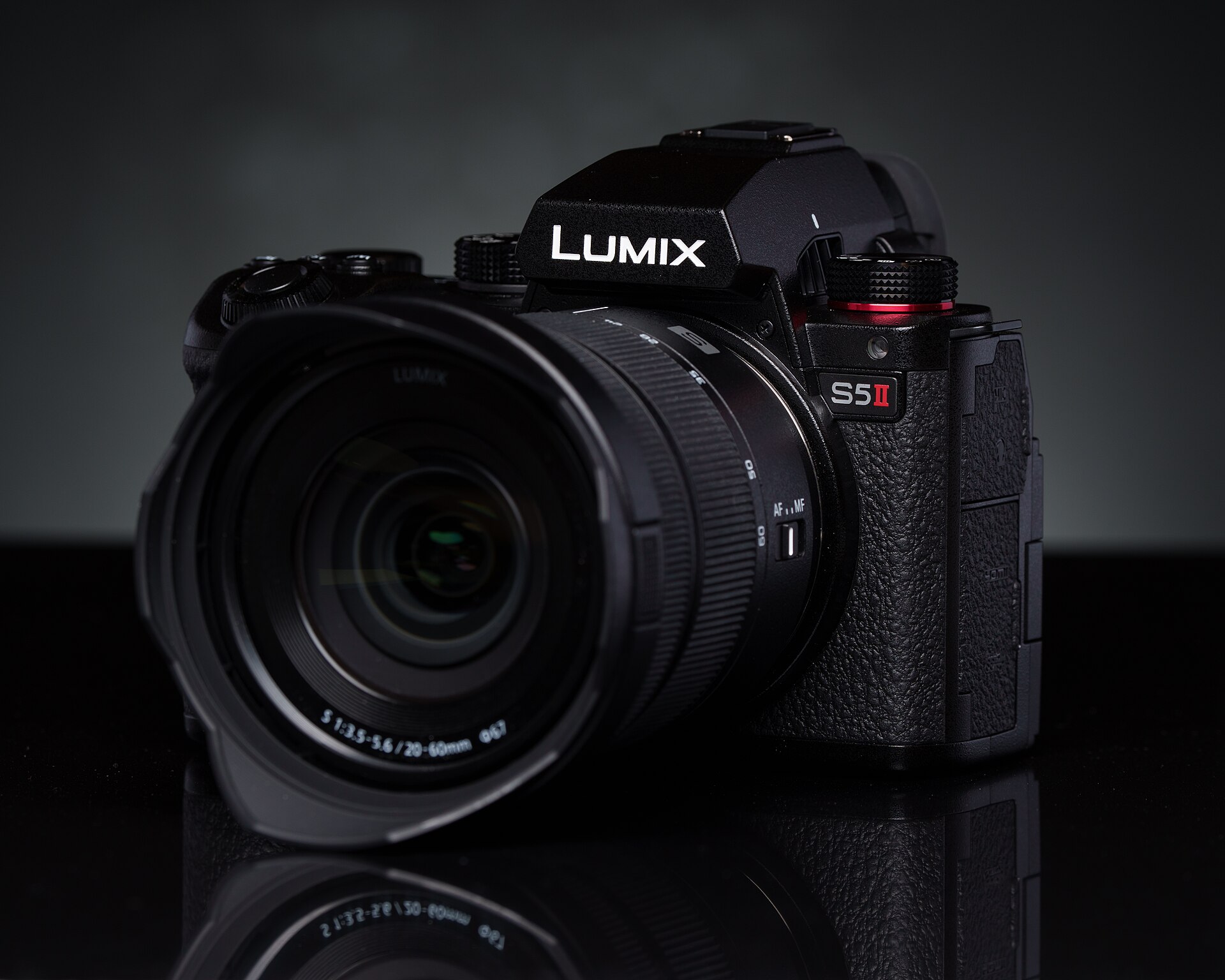
Photo: Henry Söderlund from Helsinki, Finland via Wikimedia Commons, licensed under CC BY 2.0.
A 24MP L‑Mount hybrid that brings modern AF and solid video at a sensible price, but lens ecosystem and battery habits matter.
01 / 05Who this camera suits — and who it does not
The Lumix S5 II is aimed at run‑and‑gun creators who want a compact full‑frame body that handles both stills and video without forcing a large kit. Its roughly 24‑megapixel sensor, 5‑axis in‑body stabilisation and 4K/60p video modes make it a good match for vloggers, solo documentary shooters and hybrid wedding or corporate shooters who need capable video and usable stills from the same camera. Panasonic’s inclusion of V‑Log options and video‑centric tools also keeps it attractive to videographers who want more latitude in grading. These hardware and format choices are stated in Panasonic’s product materials and spec sheet. help.na.panasonic.com
That said, the S5 II is not optimally aimed at photographers who need very high resolution or extreme low‑light performance — its sensor class sits around 24MP, which is a balance between detail and file size rather than a resolution leader. Sports and wildlife shooters who prioritise top‑tier continuous AF tracking and the fastest burst systems will find faster, more aggressive options from other makers. Independent reviews from DPReview and TechRadar emphasise the S5 II’s hybrid strengths while noting those photographic trade‑offs. dpreview.com
Finally, anyone deeply invested in a non‑L‑Mount lens ecosystem should consider the extra cost or adapters required to use their existing glass; the L‑Mount alliance broadens options but the native Panasonic/Sigma/Leica lineup still matters to the total system price and handling. Reviewers have pointed out that lens choices influence whether the S5 II truly fits a user’s workflow. digitalcameraworld.com
02 / 05What the money buys compared with obvious alternatives
The body‑only list price you supplied, US$1,999.99, places the S5 II in the sub‑$2k full‑frame hybrid segment. For that money buyers get a compact magnesium‑alloy body, a 24MP full‑frame CMOS sensor, 5‑axis in‑body stabilisation and Panasonic’s advanced video modes including 4K up to 60p and V‑Log options — features Panasonic highlights on its product page. That feature set makes the S5 II one of the more video‑forward options in its price tier. help.na.panasonic.com
Independent reviews generally position the S5 II against rivals such as mid‑range Sony and Canon full‑frame bodies. DPReview and TechRadar both describe the S5 II as punching above its weight on video and colour science, with autofocus and handling that have improved significantly versus earlier Lumix models. Reviewers often say the S5 II is more video‑centric than purely photographic rivals, so buyers comparing a Sony a7 series or Canon R line camera should weigh AF behaviour, lens availability and ergonomics as much as raw specs. dpreview.com
Value also depends on system costs: L‑Mount lenses from Panasonic, Leica and Sigma vary greatly in price, and if you need a professional‑grade zoom or fast prime the lens spend can easily double the initial outlay. For a creator who needs stabilised full‑frame video and good stills for $2k, the S5 II is competitive; for someone prioritising the widest native lens range or the highest AF consistency in stills, there are trade‑offs to consider. amateurphotographer.com
03 / 05Where it is weakest
Autofocus on the S5 II represents a large step forward for Panasonic — reviews note the introduction of phase‑detect‑style performance and improved detection algorithms — but several reviewers still describe it as conservative compared with the fastest AF systems from Sony and Canon for continuous subject tracking in demanding stills work. DPReview’s full review highlights the AF improvements while also flagging scenarios where rivals maintain an advantage. If you shoot fast action or require the most aggressive tracking, that’s a real limitation to weigh. dpreview.com
Another weakness is the dependency on lenses: the L‑Mount alliance offers options, but Panasonic’s own lens range and the cost of professional zooms mean the practical cost and size of a working kit can grow quickly. Several independent reviewers and long‑term users have emphasised that the body’s compactness can be compromised once you add a balanced, fast zoom and necessary audio or power accessories. digitalcameraworld.com
Finally, battery life and media configuration are typical compromises in a compact hybrid: you’ll need spare batteries and suitably fast SD cards for extended 4K/60p recording, and that adds to operating cost and packing. Reviewers recommend planning for those recurring costs rather than treating the body price as the total budget. techradar.com
04 / 05What it actually costs to use (lenses, cards, power)
The body list price you provided, US$1,999.99 (body only), is only the start. To build a practical S5 II kit you should budget for at least one versatile native lens, spare batteries, and fast UHS‑II SD cards. A reasonable single zoom (for example a wide‑to‑standard or standard‑to‑tele focal range from Panasonic or Sigma for L‑Mount) will typically sit in the US$700–1,500 range depending on aperture and build. High‑end zooms or fast primes cost more. Independent reviews regularly remind buyers that the lens is the major recurring cost. amateurphotographer.com
Media and power add smaller but real expenses: quality UHS‑II SD cards suitable for sustained 4K/60p recording are commonly US$50–150 each depending on capacity and brand. Spare Panasonic batteries (or third‑party equivalents) are usually US$50–100 apiece; if you plan long handheld shoots, at least one extra is sensible. Add a small shotgun mic, cables and perhaps a USB power bank for long takes and you’ll see another US$150–300. These are typical practical costs echoed in hands‑on reviews and user reports. techradar.com
In short, expect the total first‑use cost for a compact hybrid kit to sit roughly in the US$3,000–4,000 range once you add a mid‑range lens, two cards and spare power — the exact figure depends on lens choices and accessories. Reviewers emphasise factoring those items into any buying decision rather than focusing on body‑only price. digitalcameraworld.com
05 / 05Closing verdict
The Panasonic Lumix S5 II is a well‑judged hybrid: it keeps the body compact while bringing modern AF algorithms, robust in‑body stabilisation and filmmaker‑friendly video features into a package that sits under US$2,000 for the body. Panasonic’s official materials list the core specs and video options that make it a strong choice for creators who prioritise video and mobility. Independent reviewers from DPReview and TechRadar generally conclude the camera offers excellent video value and balanced stills performance, with the caveat that its strengths are hybrid‑oriented rather than purely photographic. help.na.panasonic.com
If you’re a solo creator, run‑and‑gun filmmaker or hybrid shooter who wants a compact full‑frame body with modern video tools, the S5 II is a sensible, cost‑aware pick. If your priorities are the highest possible AF tracking for fast action, the maximum resolution for large prints, or you need to minimise additional lens spend, then carefully compare the alternatives. The S5 II rewards buyers who accept those trade‑offs and who budget for lenses, cards and batteries. digitalcameraworld.com
Overall, the S5 II suits creators who want credible full‑frame video and flexible stills from a small body; it loses some appeal when used as a photography‑first tool or when paired with very large, heavy pro glass. For its target audience the S5 II represents a practical compromise between features, size and price. dpreview.com
The honest summary
After every long-form review, we publish the two-sided summary. What proved durable, and what failed during testing.
What held up
4 items- +Compact magnesium‑alloy full‑frame body with 5‑axis IBIS
- +4K up to 60p with V‑Log and video‑centric tools
- +Improved AF behaviour over previous Lumix models
- +Good balance of features at a sub‑$2,000 body price
What broke
4 items- −Autofocus still lags the most aggressive Sony/Canon systems for fast‑action tracking
- −Practical kit cost rises quickly once you add L‑Mount lenses
- −Battery and media needs for extended 4K/60p sessions add recurring cost
- −Not aimed at photographers who need the highest resolution or fastest burst rates
What it actually costs
Manufacturer list prices. Retailers discount constantly, so treat these as the figure to judge an offer against rather than what you should pay.
List price
Body only (base camera body, no lens). Manufacturer list price — retailers vary and discount often.
What to check before buying Panasonic Lumix DC‑S5 II
Hardware is bought once and lived with for years. The purchase price is the part everyone compares, and rarely the part that decides what it costs you.
What it has actually sold for
The manufacturer lists it at $1999.99, and on hardware that figure moves constantly at retail. Treat it as the figure to judge an offer against, not what you should expect to pay.
Where it sits in the release cycle
A model about to be replaced is discounted for a reason, and one just launched carries a premium that fades within months. Knowing which you are looking at is worth more than any coupon.
What it needs that it does not come with
Cases, cards, cables, batteries, lenses, mounts, subscriptions. In some categories the accessories cost more across two years than the item did, and none of it is on the price tag.
Returns, warranty, and who honours it
The return window, the warranty length, and whether the manufacturer or the seller handles a fault. A grey-market price often buys a warranty that is harder to claim against.
These are the checks we apply across cameras, in the same order, so two pages can be compared line for line.
How much does Panasonic Lumix DC‑S5 II really cost?
Our calculation from the vendor's published prices — not a figure the vendor advertises.
No paid plan with a published price.
- Pricing model not yet verified.
- No paid plan price is published on this page.
Work out your own cost
Panasonic Lumix DC‑S5 II against the field
The highest-scoring alternatives in the same category, compared on the figures we hold for all of them.
| Panasonic Lumix DC‑S5 IIThis page | OM SYSTEM OM‑1 | Fujifilm X-T5 | |
|---|---|---|---|
| ReviewCost score | — | — | — |
| Cheapest plan | List price | — | — |
| From | — | — | — |
| Renews at | Not published | Not published | Not published |
| Biggest strength | Video creators needing compact full‑frame | Bird and wildlife photographers wanting high burst rates | Landscape and portrait photographers |
| Biggest drawback | AF may trail top competitors in some scenarios | Smaller sensor vs APS‑C and full‑frame cameras | No in‑body image stabilisation |
Prices are the published figures at the time of writing and change often. Renewal pricing is shown where the vendor publishes it. See how we review.
What people ask about Panasonic Lumix DC‑S5 II
Straight answers to what buyers actually ask, drawn from the documentation and published user reports.
Does the S5 II shoot 4K/60p internally?
Is autofocus improved over the original S5?
Will I need special SD cards for video?
Page history
- Published
- 2 October 2026
- Last updated
- 2 October 2026
- Pricing checked against vendor
- 2 October 2026
Sources & verification
Pricing on this page was taken from the vendor's published pricing page on 2 October 2026.
- Panasonic Lumix S5 II — Panasonic USA product pageOfficial documentation · Panasonic · read 2 October 2026
- Panasonic Lumix DC‑S5 II — manufacturer priceOfficial pricing page · Panasonic · read 2 October 2026