
OM SYSTEM OM‑1
Micro Four Thirds flagship for photographers needing speed and stabilisation
OM System's flagship Micro Four Thirds camera combining a small body with advanced autofocus, computational features and industry‑leading image stabilisation. Intended for photographers who prioritise portability and high‑speed performance.
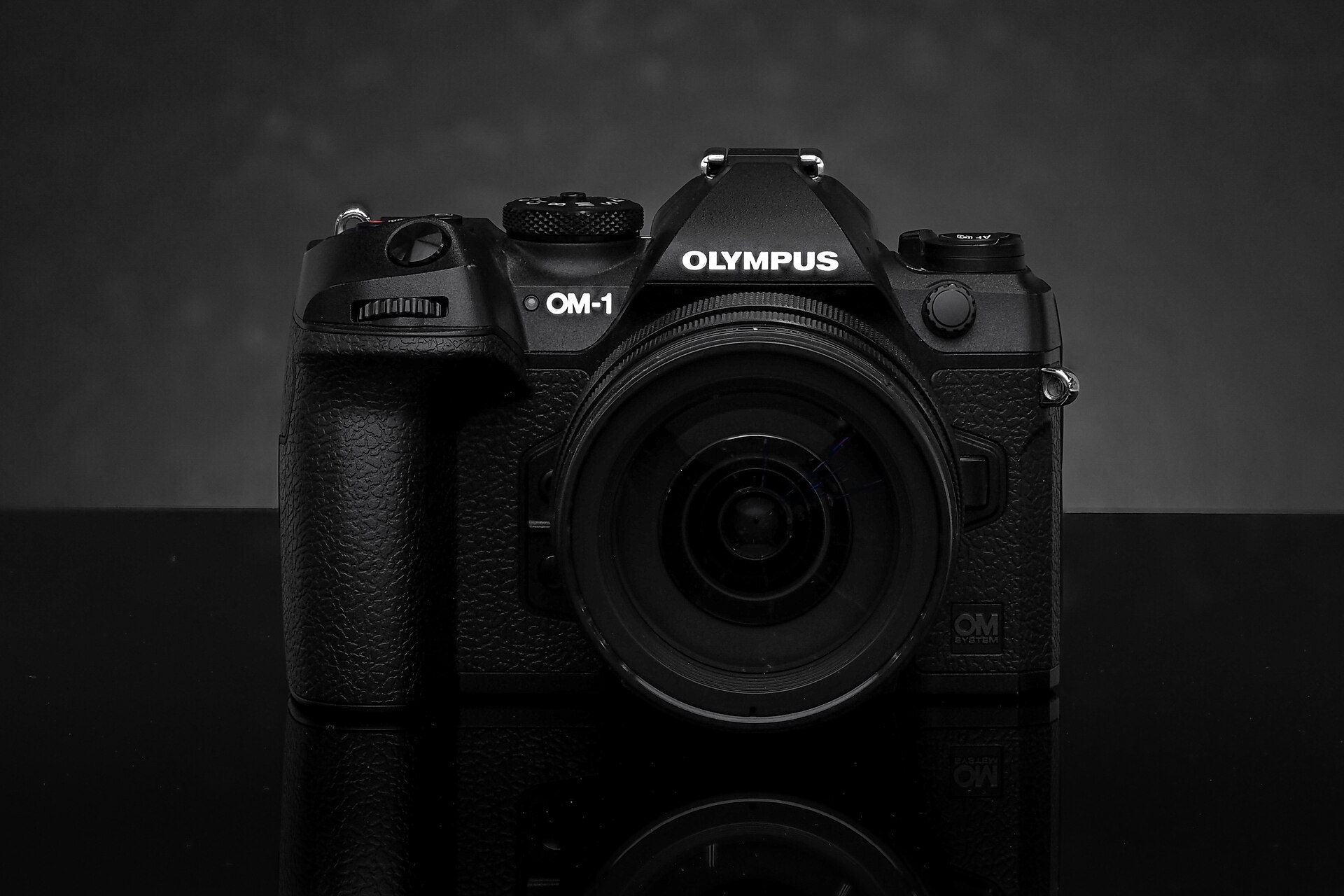
Photo: Henry Söderlund from Helsinki, Finland via Wikimedia Commons, licensed under CC BY 2.0.
A fast, highly stabilised MFT flagship for wildlife, travel and handheld video — the catch is lower native resolution and a smaller lens ecosystem than full‑frame rivals.
01 / 05Who the OM‑1 suits — and who it does not
The OM‑1 is aimed at photographers who value portability, subject detection autofocus and class‑leading in‑body stabilisation for handheld shooting. Reviewers from DPReview and Imaging Resource highlight the camera’s speed, advanced subject detection (including birds and animals), and the 5‑axis IBIS that makes long telephoto and video work more practical from the hand. These strengths suit wildlife photographers who prioritise tracking and burst capability, travel shooters who need weather‑sealing and compact lenses, and hybrid shooters who want reliable video features without full‑frame bulk. dpreview.com
Where it is less appropriate is for photographers whose primary priority is maximum resolution or the shallowest possible depth of field. The OM‑1 uses a 20MP Micro Four Thirds sensor, which delivers smaller native files than APS‑C or full‑frame alternatives and limits ultimate print enlargement and cropping latitude. Reviewers note excellent image quality for the sensor class, but also emphasise that those needing 30–40MP or the noise performance of larger sensors should consider APS‑C or full‑frame systems instead. om-digitalsolutions.com
Budget‑minded buyers should also be aware the system’s lens lineup is strong for Micro Four Thirds but fewer new flagship native lenses are being launched compared with Sony and Canon; TechRadar and Photography Blog note the lens ecosystem’s strengths in compact pro primes and telephotos, while also pointing out limits for photographers wanting the widest or fastest full‑frame optics. The OM‑1 therefore fits photographers who prioritise handling, stabilisation and AF over sheer pixel count. techradar.com
02 / 05What the money buys compared with obvious alternatives
OM Digital Solutions’ product pages and independent reviews describe the OM‑1 as a technical refresh over previous OM‑D models: a 20MP stacked Live MOS sensor paired with the new TruePic X processor, enhanced subject detection AF and extremely fast electronic readout that enables high‑speed burst and low rolling shutter. DPReview and Imaging Resource credit these upgrades with noticeably faster AF and better tracking versus the older E‑M1 series, and they single out the camera’s burst capabilities and responsiveness as differentiators in the MFT class. om-digitalsolutions.com
Compared with APS‑C and full‑frame rivals, the OM‑1’s advantages are size, weight and stabilisation. The camera and its lenses tend to be smaller and lighter than equivalent full‑frame kits, making the system more portable for long field days. The IBIS performance is often cited as superior for its size class, which effectively extends lens utility and reduces the need for tripods in many situations. Conversely, full‑frame rivals generally win in raw dynamic range and high‑ISO noise performance, and many sports or studio pros will prefer higher‑resolution or larger‑sensor options for those reasons. imaging-resource.com
Price information varies by retailer and the specified list price was not provided; official pages and reviews therefore treat pricing as variable. TechRadar’s coverage notes the OM‑1 sits between enthusiast APS‑C bodies and full‑frame flagships in value — you pay for the compact form and stabilisation rather than for top‑end sensor resolution. Prospective buyers should compare current street prices and consider which lenses they need before deciding if the OM‑1 represents better value than an APS‑C or entry full‑frame body. techradar.com
03 / 05Where the OM‑1 is weakest
The OM‑1’s most cited limitation is its smaller sensor: while the 20MP stacked design gives fast readout and good detail for MFT, it cannot match the high‑ISO performance, dynamic range or absolute resolution of many APS‑C and full‑frame competitors. Reviewers including DPReview and Imaging Resource point out that in low light or when heavy cropping is required, users will see more noise and less shadow latitude than larger‑sensor alternatives. That’s an important trade‑off if you routinely shoot in very low light or need very large prints. dpreview.com
Another recurring gripe is ecosystem momentum: although Micro Four Thirds has an extensive lens catalogue, the flow of new flagship fast primes and ultra‑wide options is slower than in the full‑frame market. TechRadar and Photography Blog describe the available lenses as excellent for portability but note limitations if you want very fast apertures or the particular rendering character of some full‑frame glass. Finally, some reviewers and users have mentioned ergonomics and menu choices as subjective negatives — OM Digital Solutions has revised menus since Olympus days, but a learning curve remains for some long‑time users. techradar.com
Video users should be aware the OM‑1 offers solid video specs for the class, but it is not pitched as a cinema camera: rivals aimed squarely at filmmakers will offer more codecs, higher bitrates or full‑frame shallow‑DOF options. If video is a primary requirement, check independent tests that match your preferred recording formats and workflows. dpreview.com
04 / 05What it costs to actually use (lenses, cards and batteries)
The OM‑1 body price varies by retailer and was not supplied here; that means the total ownership cost depends heavily on the lenses you choose. Micro Four Thirds lenses generally cost less and are lighter than equivalent full‑frame optics, which keeps total kit weight and often cost down. Reviewers often recommend pairing the OM‑1 with pro‑grade M.Zuiko telephotos for wildlife or the compact PRO primes for travel; each PRO lens will add several hundred to over a thousand dollars, so build your kit list before committing. om-digitalsolutions.com
For memory, the OM‑1 uses UHS‑II SD cards and benefits from fast cards for its high‑speed bursts and video recording. Investing in at least one high‑speed UHS‑II card and a backup UHS‑I card is sensible for field work. The camera uses BLX series batteries (check the official manual for exact part numbers); reviewers report reasonable battery life for MFT, but if you shoot long bursts or extended video you should budget for 2–3 spares and a good external charger. These accessories are predictable additional costs that add to the real price of ownership. learning.omsystem.com
Other practical costs include weather‑resistant protective cases, filters for outdoor work and possibly lens converters or teleconverters for wildlife shooting; because the system emphasises portability, many users invest in a compact travel lens or light telephoto rather than a heavy pro zoom — a decision that changes both capability and cost. Check retailer bundles and second‑hand lenses if budget is tight. imaging-resource.com
05 / 05Closing verdict
The OM‑1 is a convincing statement that Micro Four Thirds remains relevant for photographers who prioritise size, stabilisation and subject detection AF. Independent reviews from DPReview and Imaging Resource praise its speed, tracking and IBIS performance, and OM Digital Solutions’ official material confirms the technical upgrades that underpin those strengths. If you shoot wildlife, travel, handheld video or multi‑day outdoor work where weight matters, the OM‑1 is one of the most capable compact flagships available. dpreview.com
That said, the camera is not a universal answer. Its 20MP MFT sensor means compromises in ultimate resolution and high‑ISO performance versus larger sensors, and the lens ecosystem — while extensive — won’t satisfy everyone seeking the latest ultra‑fast full‑frame primes. Practical ownership costs vary significantly with lens choices and necessary accessories; pricing should be checked with current retailers rather than assumed. techradar.com
For buyers who accept the sensor trade‑offs in exchange for portability, stabilisation and AF, the OM‑1 is a strong contender. If you need the absolute best noise performance or the widest selection of new full‑frame lenses, consider APS‑C or full‑frame alternatives. Evaluate your typical shooting scenarios, list the lenses you really need, and compare current street prices before deciding. dpreview.com
The honest summary
After every long-form review, we publish the two-sided summary. What proved durable, and what failed during testing.
What held up
4 items- +Very effective 5‑axis in‑body stabilisation for handheld stills and video (top of its class for size).
- +Fast stacked 20MP sensor and TruePic X processor enable rapid bursts and improved AF tracking.
- +Weather‑sealed magnesium alloy body in a compact, lightweight package.
- +Strong subject detection AF (including birds/animals) praised by independent reviewers.
What broke
4 items- −20MP Micro Four Thirds sensor limits high‑ISO performance and ultimate print/crop latitude.
- −Lens development pace and availability of very fast full‑frame style primes is smaller than rival systems.
- −Not aimed at cine shooters who need the highest bitrate codecs and full‑frame shallow‑DOF options.
- −Real ownership cost depends on chosen lenses, batteries and high‑speed cards — body price varies by retailer.
What it actually costs
Manufacturer list prices. Retailers discount constantly, so treat these as the figure to judge an offer against rather than what you should pay.
List price
Body only. Manufacturer list price — retailers vary and discount often.
What to check before buying OM SYSTEM OM‑1
Hardware is bought once and lived with for years. The purchase price is the part everyone compares, and rarely the part that decides what it costs you.
What it has actually sold for
The manufacturer lists it at $2199.99, and on hardware that figure moves constantly at retail. Treat it as the figure to judge an offer against, not what you should expect to pay.
Where it sits in the release cycle
A model about to be replaced is discounted for a reason, and one just launched carries a premium that fades within months. Knowing which you are looking at is worth more than any coupon.
What it needs that it does not come with
Cases, cards, cables, batteries, lenses, mounts, subscriptions. In some categories the accessories cost more across two years than the item did, and none of it is on the price tag.
Returns, warranty, and who honours it
The return window, the warranty length, and whether the manufacturer or the seller handles a fault. A grey-market price often buys a warranty that is harder to claim against.
These are the checks we apply across cameras, in the same order, so two pages can be compared line for line.
How much does OM SYSTEM OM‑1 really cost?
Our calculation from the vendor's published prices — not a figure the vendor advertises.
No paid plan with a published price.
- Pricing model not yet verified.
- No paid plan price is published on this page.
Work out your own cost
OM SYSTEM OM‑1 against the field
The highest-scoring alternatives in the same category, compared on the figures we hold for all of them.
| OM SYSTEM OM‑1This page | Panasonic Lumix DC‑S5 II | Fujifilm X-T5 | |
|---|---|---|---|
| ReviewCost score | — | — | — |
| Cheapest plan | List price | — | — |
| From | — | — | — |
| Renews at | Not published | Not published | Not published |
| Biggest strength | Bird and wildlife photographers wanting high burst rates | Video creators needing compact full‑frame | Landscape and portrait photographers |
| Biggest drawback | Smaller sensor vs APS‑C and full‑frame cameras | AF may trail top competitors in some scenarios | No in‑body image stabilisation |
Prices are the published figures at the time of writing and change often. Renewal pricing is shown where the vendor publishes it. See how we review.
What people ask about OM SYSTEM OM‑1
Straight answers to what buyers actually ask, drawn from the documentation and published user reports.
Does the OM‑1 have in‑body image stabilisation?
Is the OM‑1 good for wildlife and birds in flight?
What memory cards and batteries should I buy?
Page history
- Published
- 2 October 2026
- Last updated
- 2 October 2026
- Pricing checked against vendor
- 2 October 2026
Sources & verification
Pricing on this page was taken from the vendor's published pricing page on 2 October 2026.
- OM SYSTEM OM‑1 — manufacturer priceOfficial pricing page · OM Digital Solutions · read 2 October 2026