
Nikon Z f
Full‑frame retro‑styled mirrorless for photographers who value tactile design
A full‑frame Nikon Z mount camera with retro styling and features aimed at experienced photographers who want classic handling blended with modern sensor, AF and stabilisation. It sits alongside Nikon's Z6/Z7 series as a style‑forward alternative.
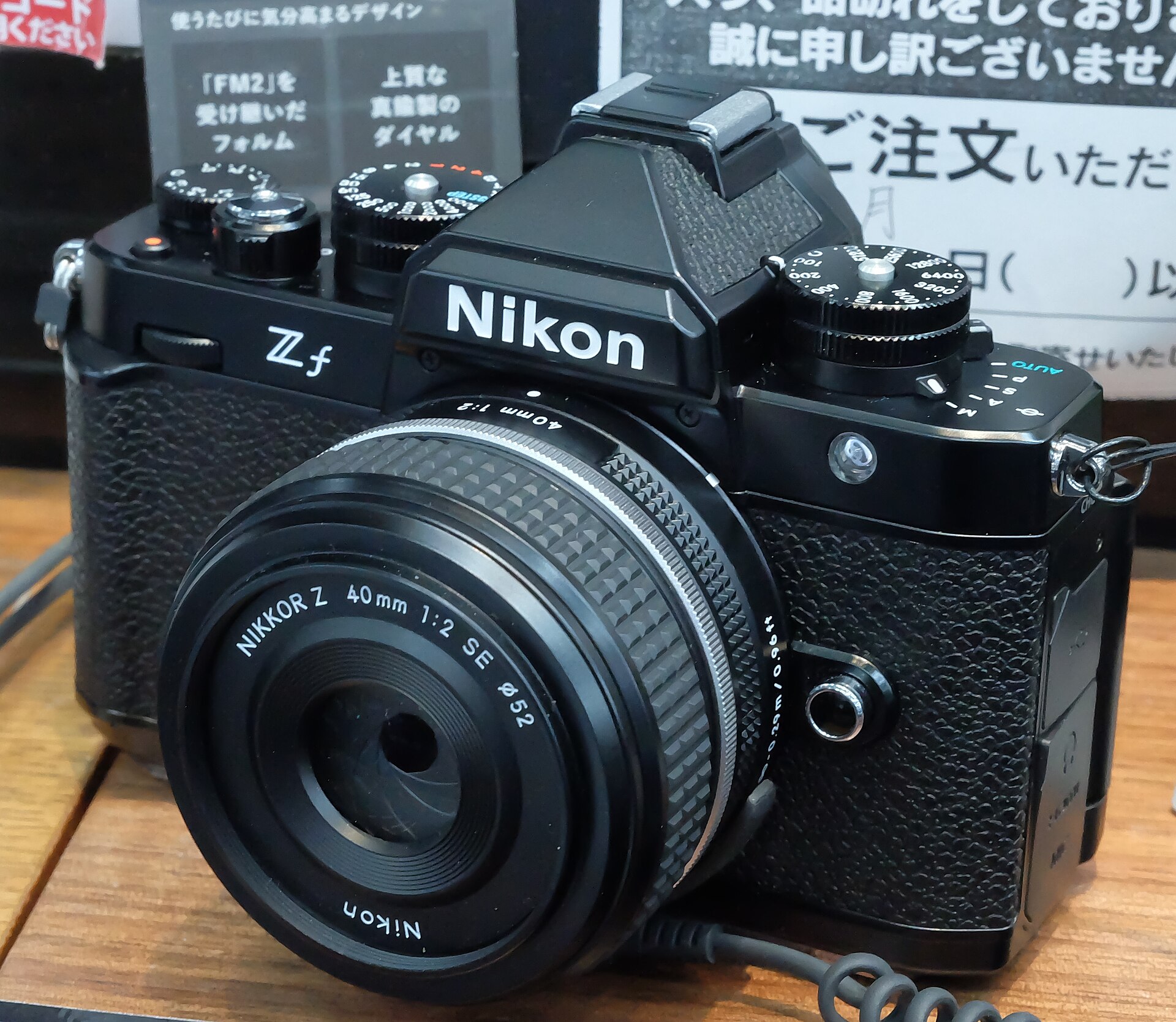
For photographers who want classic controls and strong in-body stabilisation — the catch is some omissions versus Nikon’s pro bodies and similarly priced rivals.
01 / 05Who the Z f suits — and who it doesn't
The Nikon Z f is aimed at photographers who prioritise handling and tactile controls over raw headline numbers. It dresses a modern 24.5MP full‑frame BSI sensor and EXPEED 7 processing in a retro, mechanical-appeal body with dedicated dials and a distinctive shutter-release layout; Nikon positions it as a creative, lifestyle camera rather than a rack-mounted studio tool. Nikon’s product pages list the 24.5MP sensor, EXPEED 7 engine and in‑body VR rated up to 8 stops, features that favour low‑light handheld shooting and slower‑lens work.imaging.nikon.com
That emphasis makes the Z f a good fit for street, travel, portrait and everyday documentary shooters who value the shooting experience and reliable stills performance. Reviewers from DPReview and TechRadar noted the pleasant handling and the camera’s characterful controls — points that will matter to photographers who shoot for fun as much as assignment work.future.dpreview.com
It’s less well suited to professionals who need the highest-resolution sensors, the fastest pro autofocus stacks, or the most rugged weather-sealing and port complement. DPReview and several reviewers point out that the Z f omits some pro-level conveniences found on higher‑end Z-series bodies and that the EVF and buffer behaviour are not class-leading. If pixel count, ultimate ergonomics for heavy pro use or top-tier EVF specs are priorities, a Z6 II / Z7 II or a competitor might be a better fit.dpreview.com
02 / 05What your money buys (and alternatives to consider)
The list price you supplied — US$1,999.95 for the body — aligns with Nikon’s official launch SRP and places the Z f in the mid‑range full‑frame market where style and stills ease of use are selling points. Nikon’s product page confirms that price at launch and shows kit bundles with short‑prime or zoom options.future.dpreview.com
For that money you get a modern 24.5MP full‑frame sensor, EXPEED 7 processing, Nikon’s subject‑detection AF with multiple categories, up to 14fps mechanical shooting or higher frame rates with electronic shutters (Nikon quotes up to 30fps in certain modes), 4K video options and the headline IBIS claim of up to 8 stops. These are substantial capabilities for the price and make the Z f more capable than retro‑styled APS‑C models while being cheaper than Nikon’s flagship pro bodies.imaging.nikon.com
Alternatives to weigh include the Z6 II (more understated, slightly older sensor tech but balanced for pro work), Sony’s A7 IV (higher resolution/feature set at a similar price), and Canon’s EOS R6 Mark II for those prioritising continuous AF and video features. Reviewers have repeatedly urged prospective buyers to compare handling and AF preference rather than pick on spec alone.techradar.com
03 / 05Where the Z f is weakest
Several independent reviewers point to trade‑offs in the Z f’s specification that temper its appeal for demanding users. DPReview called the EVF resolution and some UI quirks less competitive than rivals, and noted that while Nikon borrows 3D Tracking and other AF ideas from higher models, the sensor and readout approach are not the same as Nikon’s stacked CMOS pro bodies. That impacts buffer depth and some high‑speed AF behaviours under certain conditions.dpreview.com
Battery life and the number of physical custom buttons have also been highlighted. DPReview observed that one of the camera’s five buttons is the Playback button, effectively reducing the number of freely mappable controls compared with some Z siblings. TechRadar and others flagged that while the camera’s styling is its selling point, it does not bring every modern convenience—such as the very fastest EVF specs or the largest buffer—found on more pro‑oriented models.future.dpreview.com
Video shooters should note that although the Z f records 4K and has higher‑frame options, some reviewers see it as more of a stills‑first tool; those who shoot heavy video workflows might prefer a camera with more video‑centric ergonomics and features. For action specialists, the Z f is capable but not the absolute top performer when compared to Nikon’s stacked sensor bodies or certain rivals.nikonusa.com
04 / 05What it costs to actually use (lenses, batteries, cards)
The body price of US$1,999.95 is only the start. Typical Z‑mount lenses range from the budget 24–50mm-style options through to S-line primes and fast zooms; expect to add at least US$400–900 for a versatile mid‑range zoom or about US$600–1,000 for a high-quality standard prime. Nikon’s native Z lenses are well regarded for optical quality, but they substantially increase the total outlay compared with buying an all‑in‑one kit zoom.nikonusa.com
Media and power are modest ongoing costs: the Z f uses XQD/CFexpress or SD cards depending on the slot (check the exact card support for your region and firmware), and a spare EN‑EL15 series battery is a sensible buy for long shoots. A high‑capacity CFexpress card for high‑speed sequential shooting or continuous 4K recording can add US$150–300 to the bill; a good SD UHS-II alternative is cheaper but limits the top continuous performance. Third‑party batteries and chargers reduce cost but are variable in reliability.download.nikonimglib.com
Also factor in accessories such as protective cases, a circular polariser or UV filter, and possibly an external microphone for video. In short, a practical working kit with one good lens, a spare battery and a mid‑range card will commonly push the entry price well above US$2,500; a more complete kit easily reaches or exceeds US$3,000 depending on lens choices.techradar.com
05 / 05Closing verdict
The Nikon Z f is best read as a design‑led full‑frame mirrorless: it packages recent Nikon imaging tech — 24.5MP BSI sensor, EXPEED 7, capable IBIS and modern AF — into a camera that dresses shooting in a tactile, retro package. Nikon’s own materials and independent reviews agree that the camera delivers on the intended experience, favouring feel and stills usability over absolute top‑end numbers.nikonusa.com
If you place a high value on delightful handling, classic dials and stills image quality for portraits, street or travel work, the Z f represents a strong, characterful choice at its US$1,999.95 body price. You should however accept the trade‑offs: it is not Nikon’s highest‑spec AF or video platform, and some reviewers note quirks in button allocation, EVF and buffer behaviour compared with pro models.dpreview.com
In short, buy a Z f if you want a full‑frame camera that prioritises feel and reliable stills performance and are prepared to choose lenses and media to match your workflow; seek other Z bodies or rival models if you need the very fastest pro autofocusing, deeper buffers, or video‑first ergonomics.imaging.nikon.com
The honest summary
After every long-form review, we publish the two-sided summary. What proved durable, and what failed during testing.
What held up
4 items- +Classic, tactile control layout and distinctive retro styling
- +24.5MP full‑frame BSI sensor with EXPEED 7 processing for strong stills
- +In‑body image stabilisation (claim up to 8 stops) helps handheld low‑light shooting
- +Capable subject‑detection AF and usable 4K video options
What broke
4 items- −EVF resolution and buffer behaviour not class‑leading versus pro rivals
- −Fewer freely mappable physical buttons than some Z siblings
- −Not the top choice for heavy video or action professionals
- −Total kit cost rises quickly once you add lenses, fast media and spare batteries
What it actually costs
Manufacturer list prices. Retailers discount constantly, so treat these as the figure to judge an offer against rather than what you should pay.
List price
Body only. Manufacturer list price — retailers vary and discount often.
What to check before buying Nikon Z f
Hardware is bought once and lived with for years. The purchase price is the part everyone compares, and rarely the part that decides what it costs you.
What it has actually sold for
The manufacturer lists it at $1999.95, and on hardware that figure moves constantly at retail. Treat it as the figure to judge an offer against, not what you should expect to pay.
Where it sits in the release cycle
A model about to be replaced is discounted for a reason, and one just launched carries a premium that fades within months. Knowing which you are looking at is worth more than any coupon.
What it needs that it does not come with
Cases, cards, cables, batteries, lenses, mounts, subscriptions. In some categories the accessories cost more across two years than the item did, and none of it is on the price tag.
Returns, warranty, and who honours it
The return window, the warranty length, and whether the manufacturer or the seller handles a fault. A grey-market price often buys a warranty that is harder to claim against.
These are the checks we apply across cameras, in the same order, so two pages can be compared line for line.
How much does Nikon Z f really cost?
Our calculation from the vendor's published prices — not a figure the vendor advertises.
No paid plan with a published price.
- Pricing model not yet verified.
- No paid plan price is published on this page.
- Pricing has not been verified against the vendor's page since this data was collected.
Work out your own cost
Nikon Z f against the field
The highest-scoring alternatives in the same category, compared on the figures we hold for all of them.
| Nikon Z fThis page | OM SYSTEM OM‑1 | Panasonic Lumix DC‑S5 II | |
|---|---|---|---|
| ReviewCost score | — | — | — |
| Cheapest plan | List price | — | — |
| From | — | — | — |
| Renews at | Not published | Not published | Not published |
| Biggest strength | Enthusiast and advanced photographers wanting full‑frame | Bird and wildlife photographers wanting high burst rates | Video creators needing compact full‑frame |
| Biggest drawback | Relatively high weight compared with some mirrorless | Smaller sensor vs APS‑C and full‑frame cameras | AF may trail top competitors in some scenarios |
Prices are the published figures at the time of writing and change often. Renewal pricing is shown where the vendor publishes it. See how we review.
What people ask about Nikon Z f
Straight answers to what buyers actually ask, drawn from the documentation and published user reports.
Does the Z f really have in‑body stabilisation rated to 8 stops?
Page history
- Published
- 2 October 2026
- Last updated
- 2 October 2026
Pricing on this page has not yet been checked against the vendor’s own page.