Independent reviewsno sponsored placements
Review4 min readSeptember 13, 2026

Asana 2026 Review: Mature Collaboration Platform Wrestling with Scale Pricing

Strong features and intuitive design offset by steep per-user costs and limitations at enterprise volume.

Admin
Research basisresearch-based
Asana 2026 Review: Mature Collaboration Platform Wrestling with Scale Pricing
Product reviewed
Asana
Asana excels at simplifying complex work visibility, but rapidly escalating costs become problematic as organisations grow.

The quick verdict

Scroll for the full review ↓

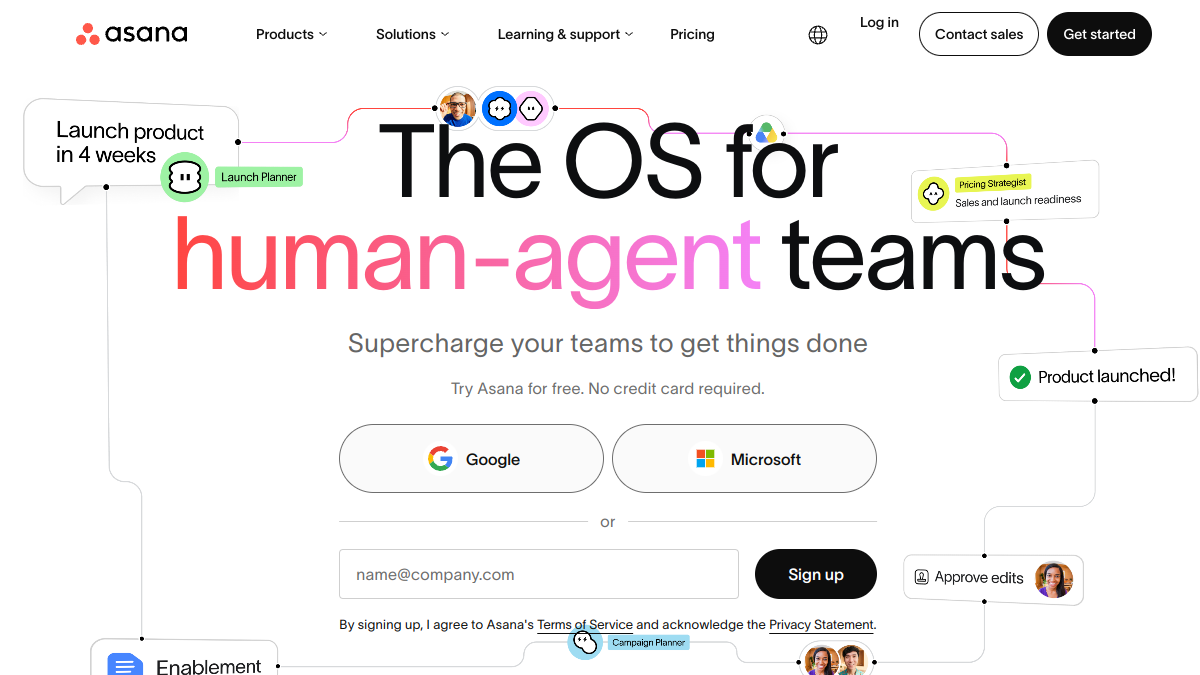
Asana positions itself as the operating system for human-agent teams, built on the Asana Work Graph and 18 years of multiplayer architecture. In 2026, the platform has matured significantly, with AI Teammates in beta, AI risk reports, prebuilt smart workflows, and integrations pairing AI Studio with tools like Dropbox and Box. The product spans collaborative, cross-functional work by connecting tasks, projects, portfolios, and goals to provide a roadmap of how work gets done. Users report high satisfaction with the core experience: most customers express satisfaction and particularly mention the intuitive user interface and the tool's versatility.

The most frequent use case cited by reviewers is project management (64% of reviewers), and portfolios bring multiple projects into a single view with real-time health indicators, allowing managers to spot delayed campaigns long before they become crises. The UI clearly resonates—Asana has invested heavily in animations, keyboard shortcuts, and visual state changes when dragging tasks between stages.

7.8/10
RC Score

01 / 06The Platform: AI-Augmented Work Management Comes of Age

Asana positions itself as the operating system for human-agent teams, built on the Asana Work Graph and 18 years of multiplayer architecture. In 2026, the platform has matured significantly, with AI Teammates in beta, AI risk reports, prebuilt smart workflows, and integrations pairing AI Studio with tools like Dropbox and Box. The product spans collaborative, cross-functional work by connecting tasks, projects, portfolios, and goals to provide a roadmap of how work gets done. Users report high satisfaction with the core experience: most customers express satisfaction and particularly mention the intuitive user interface and the tool's versatility.

The most frequent use case cited by reviewers is project management (64% of reviewers), and portfolios bring multiple projects into a single view with real-time health indicators, allowing managers to spot delayed campaigns long before they become crises. The UI clearly resonates—Asana has invested heavily in animations, keyboard shortcuts, and visual state changes when dragging tasks between stages.

02 / 06Pricing Architecture: Steep Per-User Model Strains Growing Teams

Asana's Starter plan costs $10.99 per user per month billed annually (or $13.49 monthly), whilst Advanced sits at $24.99 annually or $30.49 monthly. The company also offers Enterprise and Enterprise+ tiers with custom pricing, adding SSO/SCIM, data residency, EKM, HIPAA, advanced permissions, and audit log APIs.

This pricing model creates friction at scale. Some users report pricing becomes a drawback for growing teams, citing frustration with billing issues and inflexible subscription options. Growing teams cite pricing structure and limited features in lower-priced plans as recurring points of criticism, with many users criticising rapidly rising costs as their company scales and lack of transparency in pricing. Real-world data bears this out: average SMB pricing for Asana customers is $16,962 per year, whilst average enterprise pricing is $76,884 per year.

03 / 06Feature Set: Comprehensive but with Structural Constraints

Asana offers boards, timelines, reporting, automation, forms, calendar, portfolios, workload management, and over 100 integrations. Recent additions include subtask visibility, automations aligned with team work schedules, and relative date triggers so automations fire when deadlines near. The Starter tier includes Asana AI, Timeline/Gantt, Workflow Builder, dashboards, custom fields, forms, and unlimited automations.

However, structural limitations constrain collaborative work. In Asana, each task can only be assigned to exactly one person, which is a real drawback for collaborative teams. Additionally, users criticise the inability to edit comments; users can only delete and type new ones. Performance also suffers under load: large task volumes sometimes slow down performance.

04 / 06User Interface and Learning Curve: Widely Praised Ease of Entry

In almost all Asana reviews, users praise the clearly structured user interface. Users describe it as an easy-to-understand interface, making it easy to use and learn. Asana offers a comprehensive help section and video tutorials, which are mentioned positively in numerous case studies and reviews, with users able to find answers especially for beginner questions.

Adoption is smooth even for less technical teams. Users report that with Asana it is easy to set up tasks and collaborate on a project, assign work to colleagues with deadlines to keep projects moving, and share projects with outside vendors. However, the main difficulty with Asana comes from how much manual work is required to actually stay atop of the work you're trying to get done.

05 / 06Customer Reception: Adoption Strong, But Cost Complaints Persistent

Over 170,000 organisations including Accenture, Amazon, and Anthropic run critical work on Asana, with over 131,000 paying customers and millions of free organisations across 190 countries. Capterra ratings show 93% positive reviews out of 1,960 for comprehensive project progress tracking, with Asana scoring 4.5 out of 5 based on 13,580 reviews.

Yet criticism coalesces around economics. Users characterise Asana's pricing model as misleading and overpriced for individuals, noting pricing is okay for teams but customer service is unacceptable. The verdict: Asana users generally rate the tool positively, but also criticise its pricing and lack of flexibility. For budget-conscious teams or individuals, alternatives merit serious consideration.

06 / 062026 Outlook: AI Integration Accelerating, Cost Concerns Persist

Heading into 2026, Asana has continued to add new functions including AI tools, with AI Teammates in beta, AI risk reports, prebuilt smart workflows, and integrations with Dropbox and Box. The platform has rolled out more complex goal management tools, allowing users to craft custom fields for goals and save grid views for better organisation. These additions sharpen the platform's appeal to enterprises pursuing AI-augmented workflows.

However, structural pricing remains a barrier to entry for SMBs and the free tier. Asana's pricing is higher than competing options like Monday.com (from $9/user/month) and Smartsheet (from $9/user/month). For organisations with modest headcounts or tight budgets, the calculus favours lower-cost platforms despite Asana's superior interface and feature depth.

How we researched this

The research basis

What this review is built on. Our research is AI-assisted and draws on vendor documentation and published user feedback rather than our own lab testing — see the methodology page for the limits of that.

Duration
research-based
continuous monitoring
Test count
distinct tests
Testers
contributors
Sponsored?
No
Editorial integrity
What we observed

The honest summary

After every long-form review, we publish the two-sided summary. What proved durable, and what failed during testing.

What held up

4 items
  • +Intuitive, well-crafted user interface with thoughtful animation and UX polish
  • +Comprehensive multi-view project management (boards, timelines, lists, calendars) adapts to diverse workflows
  • +Robust free plan and low barrier to entry for initial adoption
  • +Strong AI integration roadmap with AI Teammates and workflow automation reducing manual work

What broke

4 items
  • Per-user pricing model scales poorly; costs escalate rapidly as team grows
  • Single-assignee task model limits collaborative workflows requiring shared ownership
  • Performance degradation under large task volumes disrupts user experience
  • Lack of comment editing and pricing transparency frustrate users relative to competitors
Common questions

What people ask about Asana

Straight answers to what buyers actually ask, drawn from the documentation and published user reports.

What is Asana best for?
Asana excels at cross-functional project management for mid-market teams and enterprises (50–500+ people) seeking integrated task, project, portfolio, and goal alignment. It's particularly strong for organisations running marketing campaigns, product launches, and operational planning with visibility across departments.
Is Asana free?
Yes, Asana's Personal plan is free for 1–2 users and includes basic lists, boards, and calendar views. Paid plans start at $10.99 per user per month (Starter, billed annually) for unlimited automations, Gantt charts, and Asana AI.
How does Asana's pricing compare to competitors?
Asana's $10.99–$24.99 per-user pricing is higher than Monday.com ($9/user/month) and Smartsheet ($9/user/month). For growing teams, total costs escalate quickly; research shows average SMB spend at $16,962 annually and enterprise at $76,884, making budget-conscious teams consider lower-cost alternatives.
Can multiple people be assigned to one task?
No. Each Asana task can only be assigned to one person, a structural limitation that frustrates teams requiring collaborative task ownership. This is a known drawback relative to competitors offering shared task assignment.
What's new in Asana in 2026?
As of December 2025, Asana has added AI Teammates in beta, AI risk reports, prebuilt smart workflows, integrations with Dropbox and Box, subtask visibility improvements, and advanced goal management with custom fields. These features target organisations pursuing human-agent collaborative workflows.
A
Written by

Admin

Asana 2026 Review: Mature Collaboration Platform Wrestling with Scale Pricing · ReviewCost